



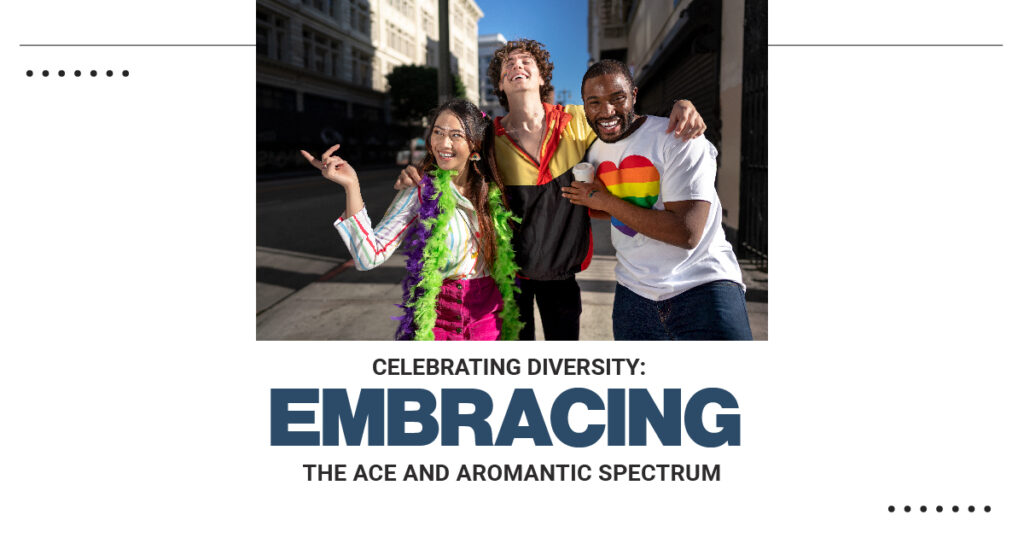
The asexual spectrum is the spectrum of sexual attraction in people, which has broad validity. Although sexual desire is what society tends to think is a universal phenomenon, some people have little to no sexual attraction. These experiences are categorized as asexuality and the broader ace spectrum, which are both natural manifestations of human diversity.
Asexuality is not a condition, a stage, or a trauma outcome. Researchers in mental health and sexuality define it as a legitimate sexual orientation. Sexual orientation, as defined by the American Psychological Association, has a continuum, and asexual identities form a significant segment of the continuum. Individuals on the asexual spectrum might have intimacy, emotional, and/or romantic needs. What is different in the manner or absence of the manifestation of sexual attraction?
When the Ace identities are not understood or addressed, then such individuals tend to grow up wondering who they are or that there is something wrong. Education and awareness are important since they eliminate uncertainties. The knowledge of ace experiences creates space to accept oneself, establish healthier relationships, and enjoy a mentally healthy mind.
Exploring Identities on the Ace Spectrum
The ace spectrum consists of various identities, which explain that sexual attraction may change with time or manifest itself under certain circumstances. These identities do not encompass strict labels. They are aids to make sense of their experiences and to express their needs.
Understanding Demisexual Experiences
Demisexuals are individuals who do not become sexually attracted until they feel that there is a strong bond between them. The attraction does not take place depending on appearance, flirting, or first impressions. The key to the formation of attraction is emotional trust and safety.
Demisexuality is categorically confused with being picky or emotionally distant. As a matter of fact, it represents an absolutely opposite tendency in attraction. Most demisexuals are brought up in a way that does not connect them with the idea of instant attraction or a desire that is casual. Being informed that such a term as demisexual exists may be highly affirming and may help years of self-doubt.
What It Means to Be Graysexual
Graysexual, also known as gray-ace, is a sexuality term used to describe individuals who feel sexual attraction infrequently, weakly, or under specific circumscribed conditions. A graysexual individual can have aspects of asexual and allosexual experiences without wholly identifying with either.
Graysexuality challenges the idea that attraction has to be consistent or predictable in order to exist. Studies and educational materials published by organizations of the Asexual Visibility and Education Network (AVEN) confirm that situational or varying attraction remains regardless. It does not need explanation or defense.
Snapshot of Identities on the Ace Spectrum
| Identity | Core Experience of Sexual Attraction | Common Misunderstanding |
| Asexual | Little to no sexual attraction | “Does not want relationships.” |
| Demisexual | Attraction after emotional bonding | “Just picky or cautious.” |
| Graysexual | Rare or situational attraction | “Confused or undecided.” |
The Aromantic Spectrum and Its Significance
The aromantic spectrum is concerned with romantic attraction and not sexual attraction. The two are not related, in spite of the fact that they are usually talked about as asexuality. One may be asexual, romantic, aromantic, sexual, both, or neither.

Individuals on the aromantic spectrum might either have no or minimal romantic attraction or be attracted in certain situations. This range is expressed by such identities as grayromantic and demiromantic. Aromantic individuals tend to be misunderstood or invalidated in cultures that define the central notion of fulfillment and adulthood as a romantic relationship.
The understanding of the so-called aromantic spectrum broadens our understanding of relationships and meaning. Social organizations of LGBTQ advocacy groups, such as GLAAD, highlight that fulfillment will be through friendships, family of choice, creative pursuits, and community engagement, rather than through romantic relationships.
Common Misconceptions About Asexuality
Misconceptions regarding asexuality are still widespread, whether in the LGBTQ+ community or not. Such misconceptions are not always good, and they may result in pressure, dismissal, or even trying to remedy the identity of someone.
Debunking Myths Within and Outside the Ace Community
- Asexuality is not caused by hormones, trauma, or fear of intimacy
- People on the “asexual spectrum” can have meaningful relationships, including romantic ones
- Asexual people are not broken, immature, or emotionally distant
- Sexual attraction is not required for love, commitment, or closeness
- Identities like “demisexual” and “graysexual” are valid self-descriptors, not trends
These myths tend to make individuals not identify themselves within the ace spectrum. The Trevor Project suggests that identity validation is deficient in LGBTQ+ youth, including members of the ace community, which is associated with increased anxiety and depression rates.
The Importance of Ace Visibility and Representation
Visibility is an imperative mental health and social well-being factor. When individuals witness their experiences in media, education, and healthcare, they tend to feel that they are not isolated and that they are backed up.
Lack of visibility has actual implications. Asexual people have made numerous reports that they spent years believing something was wrong with them. Research used by AVEN indicates that finding ace-related language lingo can be a relief, boost self-esteem, and lead to healthier relationships.
Care is also enhanced through representation. The clinicians, educators, and families should be aware of ACE experiences – this way, they are in a better position to provide support. The inclusive mental health care acknowledges that most distress arises as a result of societal pressure rather than the identity itself.
Celebrating Ace Pride in the LGBTQ+ Community
The concept of Ace pride is the celebration of being authentic and defying the notion that happiness or fulfillment is a necessity with regard to being sexual. Pride flags, awareness events, and online spaces have enabled the ace community to share stories and find language, and have connected them.
The Ace community has developed out of grassroots advocacy, education, and peer support. Such organizations as AVEN and GLAAD are still broadening social awareness and mainstreaming ace identities in the wider LGBTQ+ movement.
Being proud of being an ace also implies resisting being pushed aside. Asexuals and aromantics are a part of the LGBTQ+. Their stories talk about consent, attraction, and the various forms in which human beings will relate and attend to each other.
Find Affirming Mental Health Support at Pacific Coast Mental Health
Being out of the closet on the asexual spectrum may be empowering, but can equally be challenging in terms of relationships, family pressure, or even self-acceptance. Mental health care can be affirmed.
At Pacific Coast Mental Health Center, identities are not challenged or remedied. Therapy offers an opportunity to test limits, work through social stigma, and develop confidence without pathologizing asexuality or the asexual spectrum. In case you are questioning, out, or in need of support that really understands what it is like, compassionate care is the way to go, and to enlighten yourself, contact us at Pacific Coast Mental Health Center right now.

FAQs
What Does It Mean to Be on the Asexual Spectrum?
Being on the “asexual spectrum” means experiencing little, conditional, or no sexual attraction. It includes identities such as asexual, “demisexual”, and “graysexual”.
How Do Demisexual and Graysexual Identities Differ?
“Demisexual” individuals experience attraction after emotional bonding, while “graysexual” individuals experience attraction rarely or under specific circumstances. This means both identities fall on the asexual spectrum, but they describe different patterns of how and when attraction may naturally develop.
What Is the Relationship Between the Ace and Aromantic Spectrums?
The “asexual spectrum” relates to sexual attraction, while the “aromantic spectrum” relates to romantic attraction. They are separate but may overlap.
Why Is Ace Visibility Important for Mental Health?
“Ace visibility” reduces stigma, supports self-acceptance, and improves access to affirming mental health care. It also helps people feel less alone by showing that their experiences are shared and respected within the wider community.
How Can Someone Find Affirming Support Within the Ace Community?
Support can be found through resources like AVEN, LGBTQ+ advocacy organizations such as GLAAD, and identity-affirming providers like Pacific Coast Mental Health. Online peer communities and support groups can also provide connection, validation, and a safe space to share experiences.