




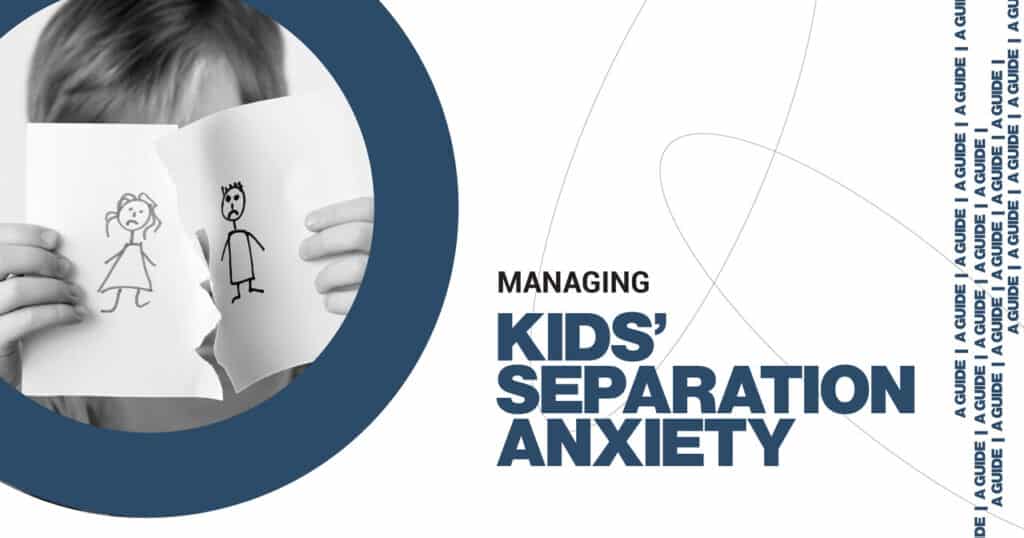
Reading Time: 6 mins
One of the most difficult tasks of dealing with separation anxiety in kids for parents and children has always been how to manage it. For many kids in the United States, the first days of school, changes in daycare, or a daily routine might create overwhelming anxiety about separating from a parent or caregiver. It may be a standard part of development for many, but in others, separation anxiety disorder in children interferes with daily life.
As a parent, it helps to know what causes separation anxiety in children and how to assist your child in dealing with the situation. This guide offers practical strategies, tips, and advice on managing it for your children.
How to Help a Child With Separation Anxiety
If your child suffers from separation anxiety, there are numerous techniques you can use that would make him or her feel secure and confident. Let’s learn these techniques in detail.
Pacific Coast Mental Health
Practice Separation Early
The first step in managing separation anxiety in children is to address it early on. Introduce your child as much as you can to experiences that might make the child part of you so that a small separation builds the habit among these small ages of being patient. So begin by sending them out to nearby trusted relatives or friends of yours. This will create a lasting impression on the little one. While separations may take different forms, they are usually only temporary.
The trick to this strategy is to begin early and then gradually increase the time apart. This approach not only reassures the child but also gives them the confidence to handle future separations, making each one less intimidating. Gradual exposure to separation reduces the intensity of separation anxiety and helps children build resilience.
Build Familiarity
Children often suffer from separation anxiety simply because they are unsure of what lies in the place left for them. This is mainly observed in children who begin daycare or school for the first time. To overcome this anxiety, it is essential to familiarize them with the new environments.
Take the time to visit the new school, daycare, or caregiver’s home beforehand. Show your child around and let them explore the area with you present. Let them know safe, comforting spaces where they can go to feel secure. Encourage them to play and interact with the teacher or caregiver so that when you leave them there, they feel more comfortable.
If your child has specific fears or concerns about the place, address them before the separation occurs. If they are worried about how to ask for help or what to do when they are feeling scared, provide clear answers and role-play possible situations. Building familiarity makes the unknown feel less scary and increases the child’s confidence.

Communicate Clearly and Be Consistent
Clear communication and consistency are essential when managing separation anxiety in children.
- Help Children Understand Separation. Young children, in particular, may not always understand why they must be separated from you.
- Explain the Situation in Simple Terms. It’s essential to explain the situation in simple terms, ensuring they understand what’s happening.
- Provide a Reassuring Routine. For example, if he or she is going to school for the first time, Explain the routine: “I’ll take you to school early and return in the afternoon. I’ll always come to fetch you.”
- Build Trust Through Consistency. Being consistent in words and deeds helps the child grow up trusting. Try to tell him or her that this separation is also temporary and assure them that you will surely be there after some time.
Another important point is to set a routine when leaving that is similar each time. This way, your child can feel safe knowing that things will go the same way every time he or she has to leave you.
Embrace Positive Reinforcement
Positive reinforcement can be a huge tool when dealing with separation anxiety in children. If your child can handle separation well enough, even if it’s just stepping forward, praise their bravery. Words of encouragement to your child could be, “You did such a great job staying with your teacher today!”
| Rewards | Reinforcing positive behavior can also be tied to rewards. |
| Encouragement | If your child successfully navigates a separation, consider giving them a small reward, like a favorite treat or an extra story at bedtime. |
| Confidence | This helps create positive associations with separation and encourages your child to feel confident. |
The idea of positive reinforcement does not necessarily have to be based on material rewards, it’s simply enough with emotional praise and encouragement for a child to feel secure and understood.
Keep Goodbyes Short and Sweet
Long, drawn-out goodbyes will also add to a child’s anxiety, so what was meant to be a little tricky may become much worse. The more you linger or the more upset you appear, the more likely your child will become anxious.
Establish a goodbye routine and stick to it. You can promise your child that you’ll return to take them home at a certain time and stick to it. Reassuring them of coming back is the best way to gain trust, and then the routine will make each separation easier to handle.
Remember, the longer the goodbye, the harder it will be for both of you. Stay calm, confident, and positive to make it easier.
When to Talk to a Doctor
While some degree of separation anxiety in children is standard, there are times when it may require the help of a healthcare professional. A doctor or other licensed health professional will be appropriate if it is severe enough, persistent enough, or interferes enough with their functioning.
Signs Your Child May Need Professional Help
If your child’s anxiety interferes with going to school or normal activities or results in physical symptoms such as headaches or stomachaches because of anxiety, it could be time to seek professional help. Other signs that could indicate a need for professional intervention are when your child exhibits:
- Severe distress over separations longer than usual.
- Difficulty is extreme concerning adjustments in routine or strange places.
- Tends to retreat, avoid association, or panic at parent separation.
- Physical signs such as vomiting or crying fit the mere idea of separation.
Although separation anxiety in children is normal at certain ages, it becomes a cause for concern when it severely disrupts your child’s everyday life. If your child is consistently distressed or their anxiety is persistent, professional intervention is key.
Pacific Coast Mental Health
Dealing With Separation Anxiety in Older Children
Separation anxiety in older children might present differently compared to younger kids. Older children may not necessarily throw tantrums or cry but instead show anxiety in refusal to go to school, become anxious about a sleepover, or fearful about making new friends.
In such cases, it should be noted that older children may have more complex feelings about independence and may be unable to separate for other reasons. Therefore, their specific concerns need to be addressed with empathy and understanding.
Let your child know it is safe to be nervous about separation but equip them with emotional management tools. Encourage gradual separations and employ coping strategies such as breathing exercises or distraction techniques to help them confront their fears.
Addressing Separation Anxiety in Autistic Children
Many autistic kids will have separation anxiety, and for those having an autistic child, that could be quite a tough time. Some children develop an increased sensitivity to changes in sensory input or have difficulty coping with transitions. Such conditions add to their anxiety even further.
Patience and consistency are crucial for managing separation anxiety in autistic children. Visual schedules or a social story may also prepare them for the separation. Establishing a predictable routine is very important so that the child can rely on it, as predictability decreases uncertainty and, therefore, anxiety.
Keeping sensory comfort items like fidget toys, soothing music, or a favorite item may encourage separation.
Thoughts on Separation Anxiety
Separation anxiety in children is common, but it can be managed if done patiently and consistently. A child can easily manage this phase with great confidence if they practice early separation, familiarity, good communication, and positive reinforcement. In any case, professional help is always available if the anxiety of your child is too overwhelming or persistent.
If your child is suffering from separation anxiety, do not hesitate to seek help. Gradual strategies that can be used at home or professional therapy can help, and support is available so your child can thrive.
Call to Action
If you notice persistent signs of separation anxiety disorder in your child, you should get in touch with a pediatrician or a child psychologist. Early intervention may work wonders for your child when it comes to feeling more secure and confident. It’s possible to take the first step today in providing your child with what he or she needs to help manage their anxiety and lead a happy, healthy life.

FAQ’s
Here are some common questions about separation anxiety in children that may help clarify concerns:
How long does separation anxiety last in children?
Most often, Separation anxiety is simply an ordinary stage that might last for a few weeks to some months, mainly in little kids. If it persists or worsens, professional assistance may be required.
What are the symptoms of separation anxiety disorder in a child?
Indications for separation anxiety disorder in a child involve severe distress when the child is away from a parent, stomachaches or headaches, nightmares, refusal to go to school, and intense clinginess.
Pacific Coast Mental Health
What do I do to help my child if he or she has separation anxiety in older children?
Older children should be able to acknowledge their feelings and then work out some coping strategies with their parents. Gradual exposure, thorough communication, and positive encouragement will go a long way in overcoming the anxiety of older children.






![Anxiety vs Panic Disorder: How to Recognize Symptoms and Take Control Anxiety and panic are two words that have at one time or another been used interchangeably by the majority of people. And although the two conditions may coexist, these are two clinical disorders with their own patterns, triggers, and treatment requirements. Understanding the anxiety vs panic disorder difference is not merely a matter of semantics. It can define the speed at which the appropriate help is received by an individual. Anxiety vs Panic Disorder: Recognizing the Critical Distinctions Anxiety is a natural reaction of how the body reacts to perceived stress or uncertainty. It is a future-oriented, constant feeling that something bad may occur. Panic disorder, on the other hand, can be described as the sudden and recurrent outbursts of physical and emotional distress that appear to have no warning signs. They both belong to the larger category of anxiety disorders, yet they work differently. Frequently, anxiety is associated with measurable stressors - work-related pressure, relationship issues, concerns about health. Panic disorder has no obvious cause of the disorder, and this aspect contributes to its disorienting nature. Why Misidentifying These Conditions Delays Treatment In a situation where one is not sure of the symptoms of anxiety or the full symptoms of panic disorder, every person understands precisely what he or she is going through, but can rather attribute it to stress or even a physical disease. Patients have a common tendency to visit emergency rooms immediately after the first panic attack because they believe that their heart is malfunctioning. Such a false diagnosis costs months, even years, of delayed mental healthcare. Early and correct diagnosis is considered one of the strongest instruments that a person can have during the recovery process. Physical Symptoms That Set Panic Attacks Apart From Anxiety The intensity and speed of panic attacks characterize them. The symptoms strike suddenly and violently, and they usually reach their climax in 10 minutes. Raised heart rate, chest tightness, dyspnea, dizziness, sweat, trembling, and an intense feeling of impending doom are all common physical experiences. Some individuals describe the experience as feeling as though they are dying. These episodes are not exaggeration—the body is producing a full physiological crisis response. [Image-1_Here] How Anxiety Symptoms Build Gradually Over Time The symptoms of anxiety build up instead of bursting. Common hallmarks include muscle tension, fatigue, difficulty concentrating, irritability, and persistent worry. Anxiety can manifest itself in someone as a persistent low-level sense of dread, which can impair day-to-day functioning over time, as opposed to a single outburst. Anxiety can be gradual and, therefore, be rationalized and put off. The Fear Response: Understanding Your Body's Alarm System The basis of both conditions is the fear response, a neurological response that is meant to defend you against danger. When your brain feels threatened (real or deemed to be so), it causes adrenaline and cortisol to be released, which leads to the fight-or-flight reaction. The heart beats faster, the breathing becomes faster, and the muscles become tighter. This reaction is turned off when the threat is over in a healthy condition. This alarm system fails in anxiety disorders and panic disorders. It is activated by a lack of real threat—or remains activated long after the threat has passed. The Anxiety and Depression Association of America (ADAA) notes that anxiety disorders are among the most common mental health conditions in the United States, affecting over 40 million adults annually. Knowledge of this biological process assists in overcoming the embarrassment most individuals have regarding their symptoms. Your brain is doing exactly what it was designed to do, just at the wrong time. Anxiety Disorders: Types and How They Manifest Anxiety disorders are a broad clinical range. The most frequent types were subdivided into the following and compared with the symptoms of panic disorder: Condition Core Experience Onset Pattern Common Triggers Generalized Anxiety Disorder Chronic worry across multiple areas Gradual, persistent Everyday stressors Panic Disorder Recurring unexpected panic attacks Sudden, episodic Often no identifiable trigger Social Anxiety Disorder Fear of judgment in social settings Situational Social interaction Specific Phobia Intense fear of a specific object/situation Situational Defined triggers Agoraphobia Fear of places is tied to panic Escalating over time Public spaces, crowds The first step in finding specifically effective care is to find where your experience falls in these categories. Panic Disorder Symptoms and Their Impact on Daily Life The symptoms of panic disorder not only change the life of an individual but are also observed to be recurring. A lot of individuals shun areas where they have previously experienced an attack, such as in transit, in the shopping malls, and on the highways. This avoidance action strengthens, not decreases, the anxiety. The world becomes smaller as time goes by. Work performance suffers. Relationships are strained. The individuals are prone to embarrassment or misinterpretation. According to the National Institute of Mental Health (NIMH), untreated panic disorder may lead to the development of depression and substance use disorders with a significant risk. These compounding effects render the early intervention not only effective but also necessary. Agoraphobia: When Panic Disorder Escalates One of the most serious consequences of untreated panic disorder is agoraphobia. It occurs when a person starts to have fears of places where he or she may not be able to escape in the event of an attack. Even leaving home can be a source of great fear, along with the open spaces, transport services, shopping malls, and others. Agoraphobia is not merely the fear of open spaces but rather a condition that has its root in anticipatory panic, and it would need professional care to treat the disorder. Stress Management Techniques for Both Conditions No matter whether a person has an anxiety disorder or panic disorder, stress management skills play a significant role in any treatment process. The techniques listed below can be used to mitigate the frequency and intensity of symptoms based on evidence: Diaphragmatic breathing slows the nervous system and interrupts the physical fear response before it has a chance to intensify. Progressive muscle relaxation is aimed at the physical tension that contributes to the symptoms of anxiety and panic. CBT techniques help identify and restructure distorted thinking patterns that cause anxiety. Consistent aerobic activities stabilize cortisol and can be proven to lower panic attacks in the long run. Mindfulness meditation develops the awareness of bodily sensations without dramatizing them. Restricting caffeine and alcohol decreases physiological arousal that may replicate or exacerbate the symptoms of anxiety. Phobia-Related Anxiety: When Fear Becomes Limiting A phobia is not just discomfort, but rather an irrational, extreme fear that greatly interferes with normal living. Anxiety associated with a phobia may manifest itself in the form of fear toward certain things, events, animals, or the environment. When a person is exposed to their feared stimulus, the reaction is similar to a panic attack—the heart races, the skin becomes clammy, and the urge to escape is overwhelming. [Image-2_Here] Phobias are prone to increase when left unattended. An individual with a fear of driving can quit commuting. An individual who is afraid of socializing can turn out to be a social outcast. Early treatment of phobia anxiety before avoidance behavior has become deeply rooted radically enhances results. Taking Control: Your Path Forward With Pacific Coast Mental Health The first step that needs to be taken is understanding whether you are facing anxiety, panic disorder, agoraphobia, or a phobia—but that is not the final step. Whether you are still trying to understand the anxiety vs. panic disorder difference or have already recognized your symptoms, these disorders are highly treatable with the right clinical support. At Pacific Coast Mental Health, our team of professionals is dedicated to making sure that every person understands precisely what he or she is going through and constructs his or her own treatment plan that is effective. You are either going through your first panic attack or have been living with anxiety disorders all your life, but now you can get help and get back to normal. You are not the only one who has to cope with it. Contact Pacific Coast Mental Health today to take the first step toward lasting relief. FAQs Can panic disorder symptoms occur without an anxiety disorder diagnosis present? Yes. Panic disorder can also stand alone without the latter diagnosis of anxiety disorder. Yet there is a close overlap between the two and the clinical evaluation must be conducted very well so as to come up with the correct differentiation between the two. How do breathing exercises specifically help reduce panic attack intensity differently than anxiety? Breathing exercises in the process of a panic attack lead to a direct break of the acute physiological surge, slowing down the cardiac rhythm and minimizing the carbon dioxide imbalance, the outcome of hyperventilation. Breathing interventions are slower in nature in the case of anxiety symptoms, which reduces the degree of nervous system activation in the long term but does not stop an acute attack. Does agoraphobia always develop after repeated panic disorder episodes occur? Not always. Panic disorder can result in agoraphobia, or it can happen by itself. That being said, frequent untreated panic attacks are a tremendous contributor to agoraphobia as a result of the accruing avoidance behaviors. Which stress management techniques work best for phobia-related anxiety specifically? The exposure-based therapies, as well as the techniques of controlled breathing and stress management, like progressive muscle relaxation, are considered the most effective ones in anxiety related to phobias. The practice of the gold standard is a slow, repeated exposure to the dreadful stimulus in a safe, supported environment. Why do panic attack symptoms peak within minutes while anxiety builds slowly? Panic attacks consist of a full-scale, uncontrolled outburst of the fear response, and it floods the body with adrenaline in an incredibly short duration of time. The signs of anxiety are suggestive of a low-grade persistent stress response, triggered by a prolonged rise of cortisol and is not triggered in a sudden burst of hormone - the signs do not come in a burst so much as appear gradually. - Pacific Coast Mental Health Distinguish anxiety from panic disorder with clinical insights on symptoms, onset patterns, and treatment approaches for effective mental health care.](https://pacificcoastmh.com/wp-content/uploads/2026/03/p6-1024x538.jpeg 1024w, https://pacificcoastmh.com/wp-content/uploads/2026/03/p6-300x158.jpeg 300w, https://pacificcoastmh.com/wp-content/uploads/2026/03/p6-768x403.jpeg 768w, https://pacificcoastmh.com/wp-content/uploads/2026/03/p6.jpeg 1200w)